
Urban vs. Rural in Canadian Literature
by Chloë Filson
In a recent Meta-Talon article, “Reflections on Regionalism,” Megan Jones referred to the “quietly profound writers that dwell in far-off corners and dense urban hotbeds of this vast country.” This description points to one of the most important – or at least one of the most critically discussed – tensions in Canadian literature: urban vs. rural.
The basic methodology of Deconstruction would have us seek out this binary – urban/rural – in examples from Canadian literature, leading us to realize that we often assign a hierarchy to the two ideas; that is, our psyches usually categorize “urban” (and all its connotations and associations) above “rural” (and all its connotations and associations).
And yet the rural has held sway: from Roughing It in the Bush to Anne of Green Gables to Surfacing to A Complicated Kindness, we have celebrated literal survival in the natural world or social survival in small communities as an analogy for personal emotional or spiritual survival. In Sunshine Sketches of a Little Town (and its lesser-known but equally funny counterpart, Arcadian Adventures with the Idle Rich) and in the Deptford Trilogy, we poke fun at small towns while idealizing them as, somehow, iconic Canadian culture and society.
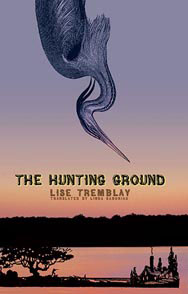
Lise Tremblay’s The Hunting Ground modernizes that paradox, exploring shifting balances of power: a once self-sufficient northern town gradually becomes economically dependent on guiding tourists and retirees from “the big city.” Fear of the encroaching city is further heightened in Kevin Kerr’s Unity (1918), in which a small Saskatchewan town closes itself off from the world as protection from the influenza epidemic. (Garrison mentality, anyone?)
Urban voices and settings have had their say too (especially in the last decades of the twentieth century, despite or because of nationalist cultural efforts): Montreal, for example, comes alive in the works of Mordecai Richler, Michel Tremblay, and others. (Tremblay’s most recent novel, Crossing the Continent is the first in a series that sees the wide spectrum of Canada and eventually the focused place-ness of Montreal through the eyes of Rheauna, a character based on his own mother in childhood.) Miss Take by Réjean Ducharme again puts modern Montreal under the microscope when sixteen-year-old Miles and his childhood companion, the fourteen-year-old Inuit orphan Chateaugué, run away to the city and rent a flat opposite Notre-Dame-de-Bonsecours.


Justin D. Edwards and Douglas Ivison insist we need to face our reality – that most Canadians are in fact city dwellers – and write so in Downtown Canada: Writing Canadian Cities (U of T Press, 2005). Darryl Whetter also broaches the subject for this Magazine in his 2009 article “Canada’s an urban nation. Why is our literature still down on the farm?”:
… setting stories for urban audiences in (a) rural areas and/or (b) the past is another Canadian example of admiring something from away. Like an offshore queen or a neighbouring superpower, the rural past is elsewhere and well known, which is all that seems required by the CanCulture establishment … Literature’s job is to be incisive, not to be blindly contemporary, and the right voice can make any story gripping. A novel about sexting and YouTube isn’t inherently more interesting than one about muskeg and bison drives. But I for one am tired of counterfeit stories with no more heart than a provincial tourism poster.
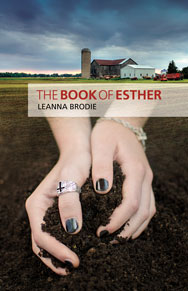
Thoughtful, contemporary works have taken on the urban/rural tension in new ways. The young protagonist in Leanna Brodie’s The Book of Esther (a play) struggles with but eventually straddles the divide, standing with one foot in her rural past and the other in her urban future. (Perhaps this is the same sort of stance our national identity will one day take?)
In fact there are many works in which characters hail from rural settings and undergo transformation when in urban settings; consider The Ecstasy of Rita Joe.
There are tales that go the other way, too, when urban realities are challenged by rural ones. A disturbing example, which reaffirms the association of “traditional values” held in rural settings and “liberal values” held in urban settings, is Michel Marc Bouchard’s Tom at the Farm (another play – and an award-winning indie film).

Douglas Coupland seems to believe that the urban vs. rural tensions in CanLit are still a focus. See his piece in the New York Times Opinion Pages, “What is CanLit?” in which he pokes and prods but ultimately concedes his support:
CanLit is when the Canadian government pays you money to write about life in small towns and/or the immigration experience. If the book is written in French, urban life is permitted, but only from a nonbourgeois viewpoint … I’m a big fan of subsidization of the arts. Without subsidization, CanLit couldn’t exist for ten minutes. Canada is a … huge and underpopulated country with no economy of scale. Maintaining an identity is expensive, period – thus the need for money in the arts. And I think the Canadian government ought to be hurling 10 times as much cash at literary arts in general, CanLit as much as anything else … CanLit needs money; it needs new blood; it needs to open its mind to ways of writing about the world outside its sacred doctrine. And this had all better happen quickly. It’s a cliché but it’s true: CanLit is about surviving inside a country’s unique landscape at a certain point in history. I hope CanLit’s instincts kick in.
I hope so too.
This article on the urban-rural divide in Canadian literature serves as an umbrella annotation to the Meta-Talon pieces on regional writing. Look for more articles to be published in coming months.

Useful Links
Latest Bluesky Posts
Phone: (604) 444-4889
Outside Vancouver: 1 888 445-4176
Fax: (604) 444-4119
Website: www.talonbooks.com
Email: info@talonbooks.com
Talonbooks gratefully acknowledges the unceded, Traditional, and Ancestral Territories of the Coast Salish Peoples, including those of the xʷməθkʷəy̓əm, Sḵwx̱wú7mesh, and səlilwətaɬ First Nations, on which we are privileged to live, work, read, and write.
Talonbooks is thankful for the financial support of the Canada Council for the Arts, the Government of Canada through the Canada Book Fund, and the Province of British Columbia through the British Columbia Arts Council and the Book Publishing Tax Credit.




Copyright Talonbooks 1963–2026
If you have any questions or comments about this website, contact the webmaster.