
“Book”: Liminal Existence and Lively Experiment
By Chloë Filson
In a recent Publishing Perspectives article (June 4, 2013), Kathleen Sweeney asserted that “ebooks still lack a category-defining storytelling experience,” by which she means that, despite increasing sales – and increasing evidence that self-publishers are successfully harnessing ebook production and the e-publishing ecosystem for their purposes – “many ebooks still reference print books to such a degree that linear, type-driven design and PDFs continue to proliferate. Ebook production often remains an afterthought of adaptive experience after a print book is written.”

There is a word for a purposefully anachronistic, non-functional design feature: skeuomorph. Examples include the fake wood panelling seen on old station wagons and the curl effect that occurs when a reader turns a virtual page on the iPad. In fact, that virtual “page” itself is skeuomorphic. Various thinkers have posited that skeuomorphs exist because humans need new things presented to them in the garb of the familiar; cars were first called “horseless carriages” for this reason, and the epithet dropped out of use as people began to grasp the new concept of the automobile, its similarities to the carriage and its differences.
Many, including Sweeney, argue that, when it comes to ebooks, the coddling period is fast coming to an end. In short, writes Sweeney, “ebooks have yet to become their own category of breakthrough storytelling experience.” (For further reading on this topic, a most thorough and thoughtful source of ideas about “book” – what it is and what it could be, in all its current and potential future forms – is Book: A Futurist’s Manifesto, which is fittingly available as a Web book at PressBooks.com, as an ebook, and as a print book.)
Talonbooks has been producing ebooks since 2011, and, yes, at present Talon’s ebooks are indeed counterparts of the print originals. (Approximately sixty Talon titles are currently available as ebooks, for sale directly from this website and other vendors, including Kobo, Nook Books, Amazon’s Kindle store and the Amazon.ca Kindle store as well, and from the Apple iBookstore.)
Ebooks do have the great potential to be and become many things at once – in form.
In style and concept, books have already learned to be many things at once.
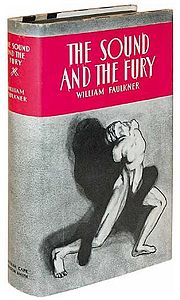
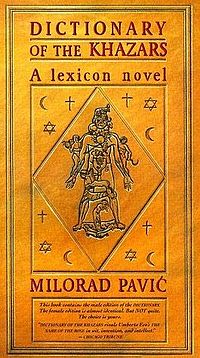
Robinson Crusoe (1719) overlaid fiction and travel writing (a popular genre at the time) and is now considered the first novel in the realistic fiction genre. The Sound and the Fury (1929), arguably the first postmodern novel, straddled boundaries and broke barriers in narrative and narration. Milorad Pavich’s The Dictionary of the Khazars (1984) presented itself as “a lexicon novel”; the narrative is gleaned by reading entries about the places and characters involved, in any order the reader chooses, rather than traveling through a linear text. Fiction is inherently experimental, but certain works (like Pavich’s, and Borges’s, and Calvino’s …) are categorized and studied as “experimental fiction” because they go further. Breaking the mould of the “book,” then, is not a discourse that developed around ebooks – though ebooks are a pivotal point of discussion, for they raise questions related to the format itself. Breaking the mould of the book has been in progress for some time, beginning (and continuing) with conceptual foundations.
Sweeney herself highlights Talon poet Adeena Karasick, whose piece Ceci n’est pas un Téléphone or Hooked on Telephonics: A Pata-philophonemic Investigation of the Telephone is an example of text on the edge and at the edges, a textual work that is also an auditory and visual experience, a “book” that is more than one thing at once:
Adeena Karasick, professor of Media and Communication at Fordham University, presented new ways of academic ideas dialogue through video, GIF, and Photoshop remix mash-ups that combine pop-cultural references with Marshall McLuhan-esque critique. Her piece, Ceci n’est pas un Téléphone or Hooked on Telephonics: A Pata-philophonemic Investigation of the Telephone, exists as a text, a live performance and a YouTube offering, an example of trans-textual forms of conceptual exploration. Is it a poem? Is it a video? Is it a remix? Is it a book? The answer may be yes to all of the above, which is where the multimedia future of the book is heading, breaking boundaries, challenging the gatekeepers and redefining the art of storytelling.
Karasick’s other works live at the boundaries as well, of sound and text and performance and visual art – and call into question the boundaries of culture, technology, and language; see This Poem (2012) and Amuse Bouche (2009) for examples.
Another apt example of a text (in the Cultural Studies sense of the word) that is so essentially liminal that it defies appellation is the Web-hosted visual/auditory/textual documentary “Welcome to Pine Point”, which was created by The Goggles and produced by the National Film Board of Canada. As the work’s “about” page says, “this could have been a book, but it probably makes more sense that it became this.” Many other pieces in the N.F.B.’s “interactive” section also tread on new ground – or many grounds – format-wise.
Dramatic works, and poetry too, naturally exist as many things at once: performances and texts, united but autonomous. These books are more than books, in this way, already. The Rap Canterbury Tales (2006) by Baba Brinkman, for example, takes many forms at once: it is a printed book, but it is a also an academic and entertaining performance piece – and it has spawned similar projects on the subjects of nature and evolution, which now make up what Brinkman tours as the Evolutionary Tales series.
Many Talon books do exist at overlaps. Many are publications that question themselves and their own forms and formats. Consider the erasure poetry of Jordan Abel’s The Place of Scraps (coming Fall 2013); or Stephen Collis’s Dispatches from the Occupation: A History of Change (2012), which began and still lives, in part, as a blog (and many books have recently emerged this way); or the poetry of Rebuild (2011) by Sachiko Murakami, which can be renovated by the reader on Project Rebuild, a companion website.


Of course, reflecting on and questioning norms and tropes and limits and questions themselves is a vital thrust in literary work. Satire, for example, and parody, are purposeful interrogations (though not by way of format or physicality); Dina Del Bucchia’s Coping with Emotions and Otters (2013) and derek beaulieu’s How to Write (2010) come to mind.
Also consider Daniel Canty’s Wigrum (coming Fall 2013), about which one reviewer wrote, “this most original work is difficult to characterize as a novel” and another reviewer hailed as “a new novel genre: an inventory!”

In fact, Wigrum didn’t begin as a book; it began as a Web project. Canty has discussed the development of this intriguing work in an artist’s statement:
… Wigrum was born of the conjunction of an encyclopædia and a Web terminal, as an online fiction, meant to showcase the abilities of the creative studio I had just joined, and to explore the possible interferences of literature and our newly networked media machines. […]As I multiplied projects, literary and otherwise, my desire for making books came to supersede most others. I spent some of my 21st century exploring the form of the book, the interface of words and images, and the possibilities of collective writing … Could a book incorporate a full palette of voices and generic potentialities, yet feel like it was written by no one? Could it become its own narrator? … I knew that it was time for me to settle down to writing a novel of my own, or something like it. In this age of the image and the rumoured death of print, I wanted to reassert the place of the literary book in an ecology where it is made to play the ancestor’s role. I must also say that the relative invisibility of my enterprises led me to consider the novel’s symbolic currency as an urgent investment into my creative future, and my peace of mind. When Simon Philippe Turcot of La Peuplade invited me to give him a book of fiction, I knew it was time for Wigrum to resolve into papery being.
… In writing Wigrum, I wished to be faithful to what made me read, made me want to become a writer, and to reassert the strange, melancholy, hold that fiction can exercise over our lives. I turned to the literature I loved, to the objects surrounding me, and to my confused feelings about reality, to make Wigrum disappear back into the literature that gave it shape. I endeavoured To tell a story as if it has already been told, and construct a narrative geometry whose vanishing points are as many entries for the reader into possible worlds, half of my own making, half his. The novel and the book are open forms, tuned to a unique frequency by the heartfelt harmonies of fact and fiction. In the beginning or the end, I hold the truth of these words as self-evident: If I can believe all the stories I am told, so can you.
What better words to conclude with than those that remind us of the playful and profound and problematic nature of literature? None.
Go read an ebook or something.

Useful Links
Latest Bluesky Posts
Phone: (604) 444-4889
Outside Vancouver: 1 888 445-4176
Fax: (604) 444-4119
Website: www.talonbooks.com
Email: info@talonbooks.com
Talonbooks gratefully acknowledges the unceded, Traditional, and Ancestral Territories of the Coast Salish Peoples, including those of the xʷməθkʷəy̓əm, Sḵwx̱wú7mesh, and səlilwətaɬ First Nations, on which we are privileged to live, work, read, and write.
Talonbooks is thankful for the financial support of the Canada Council for the Arts, the Government of Canada through the Canada Book Fund, and the Province of British Columbia through the British Columbia Arts Council and the Book Publishing Tax Credit.




Copyright Talonbooks 1963–2026
If you have any questions or comments about this website, contact the webmaster.